|
What is done during an "average" dog spay? At the Monroe Animal Hospital, we believe that even "routine" surgeries require special attention. Many things can be done to lower the cost of this surgery, but we believe all patients and their owners deserve the best care possible. The following is how we perform dog and cat spays:
|
|
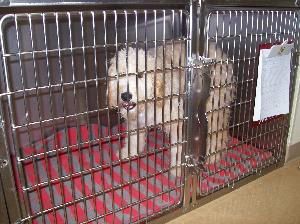
The patient is admitted in the morning and kept in our hospital ward under our constant supervision.
|
|
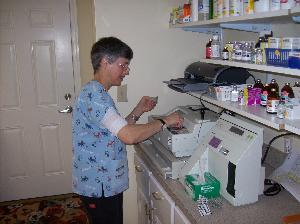
Bloodwork is taken for a Red Blood Cell count, chemistry, and electrolyte analysis
|
|
|
|
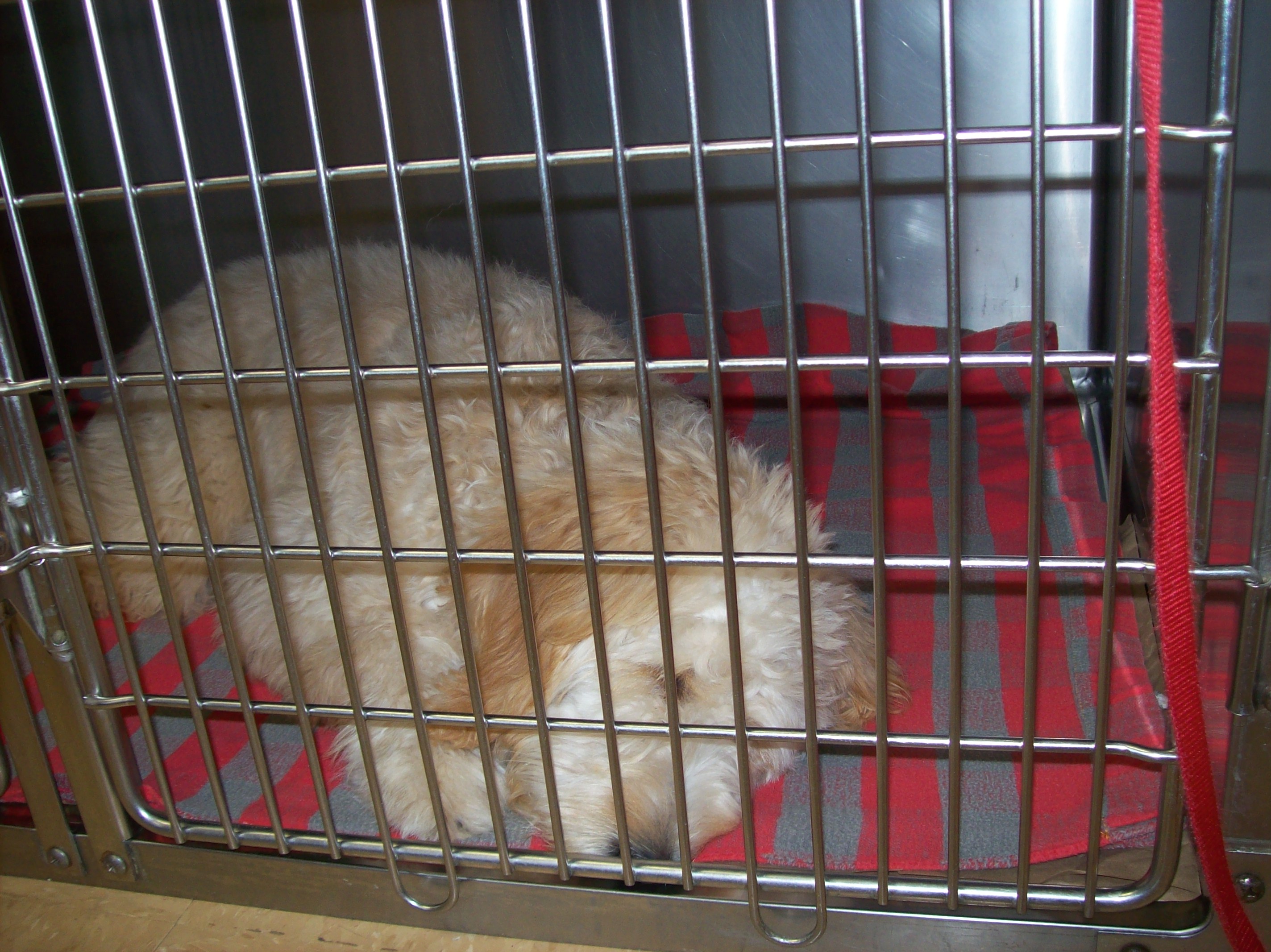
The patient is given pain medications and relaxants to reduce stress, lower anesthetic dose necessary, and prevent discomfort.
|
|
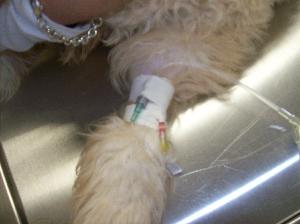
An intravenous catheter is placed to administer fluids, maintain blood pressure, and deliver additional pain medications.
|
|
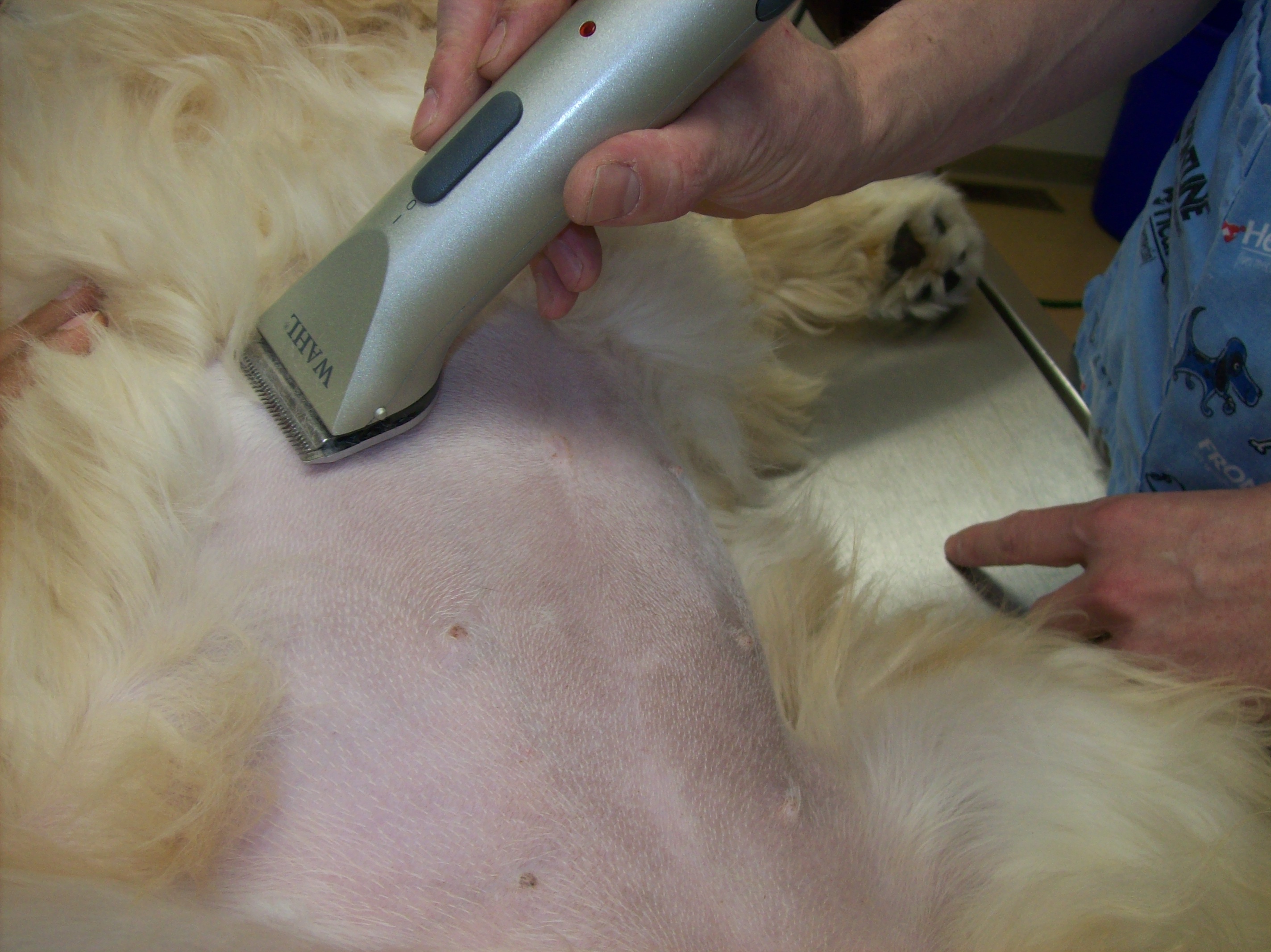
The incision site is shaved
|
|
A local anesthetic is injected where the incision will be made. This further aids patient comfort
|
|
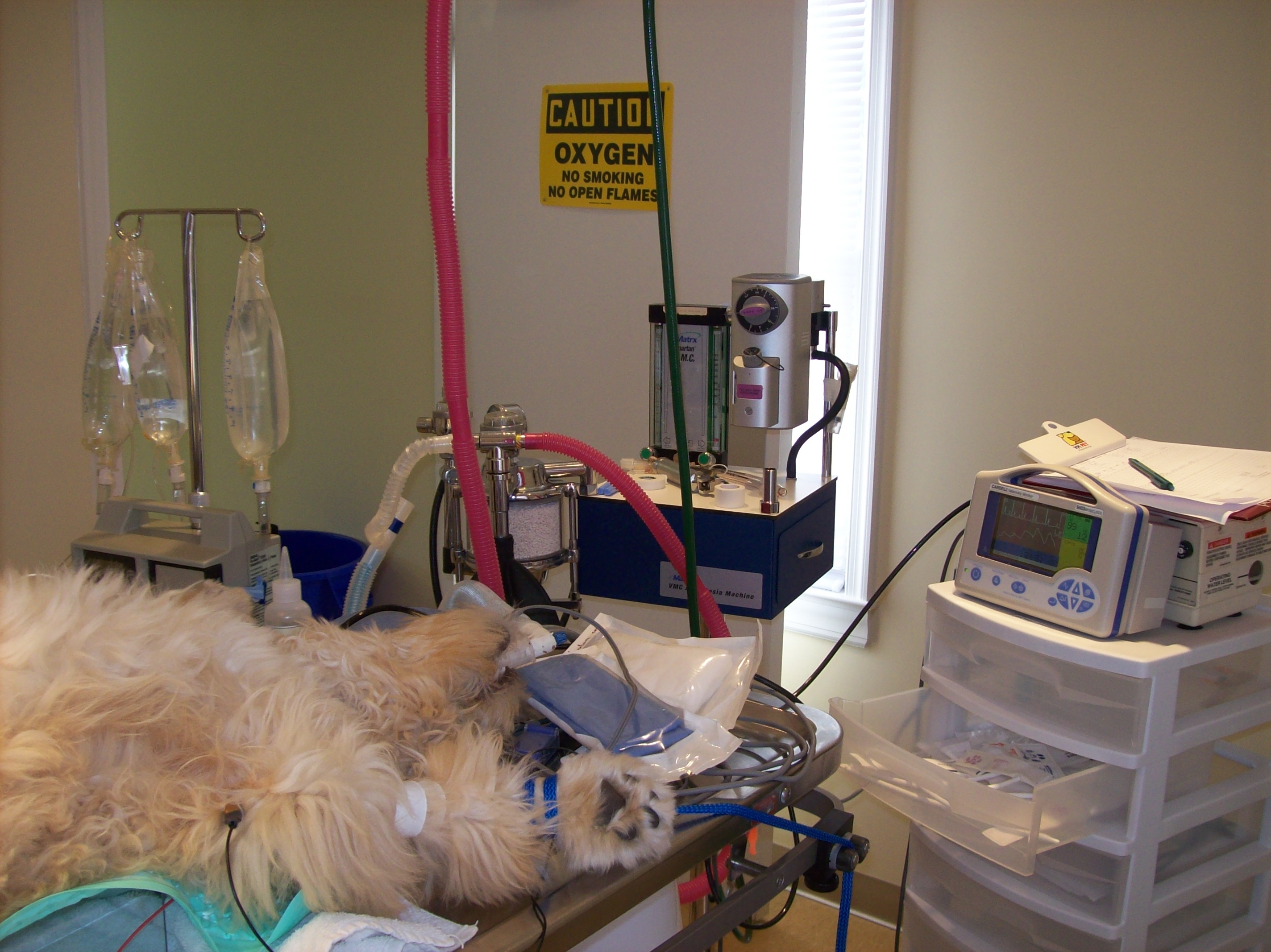
All patients under anesthesia have their fluids delivered exactly by an infusion pump. They are intubated to maintain an open airway and administered gas anesthesia. In addition they are monitored for heart rate, respiratory rate, percent of oxygen in their blood, blood pressure, and electrocardiogram
|
|
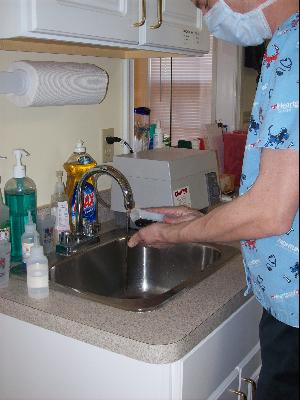
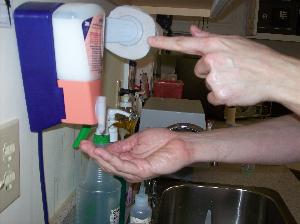
The surgeon prepares for surgery by scrubbing the hands with a brush and disinfectant. After the hands are dried, an additional disinfecant called Avaguard is applied that kills 99.99% of bacteria on the skin within 30 seconds
|
|
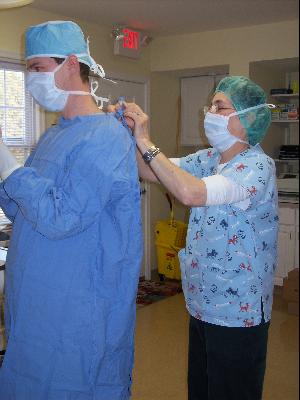
Both the doctor and assistants are capped and masked for surgery. The doctor dons a sterile surgical gown and gloves and is assisted into the gown by the assistant.
|
|
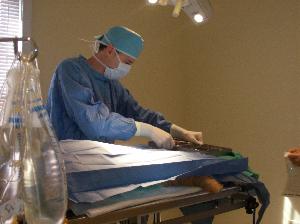
After the patient is scubbed with a combination of disinfectants, a sterile drape is placed over the patient and a sterile pack of instruments, scalpel, and suture material are opened.
|
|
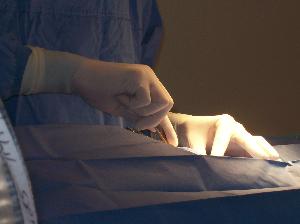
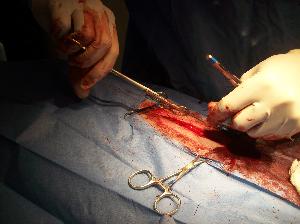
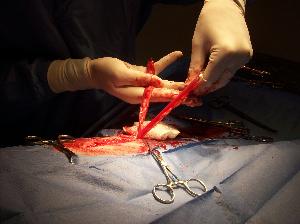
The initial incision is made. After the abdomen is entered, an ovary and its attached uterine horn is retrieved and removed from the abdomen. The blood supply to these organs is ligated. The process is repeated on the opposite side. After both sides have been done, the body of the uterus (pictured middle) is tied off prior to removal. After the ovaries and uterus are transected, the abdomen is inspected for any bleeding and the process of closing the muscles, underlying tissue, and skin is begun. We place all of our sutures under the skin and reinforce them with a layer of surgical cyanoacrylate adhesive to minimize patient discomfort and risk of opening the surgical site
After surgery an application of low level laser therapy is applied to the incision to reduce pain and promote wound healing. More information on this can be found on our homepage.
|
|
The patient is allowed to recover from anesthesia and is kept on a constant rate infusion of pain medications throughout their hospital stay. They will go home later in the day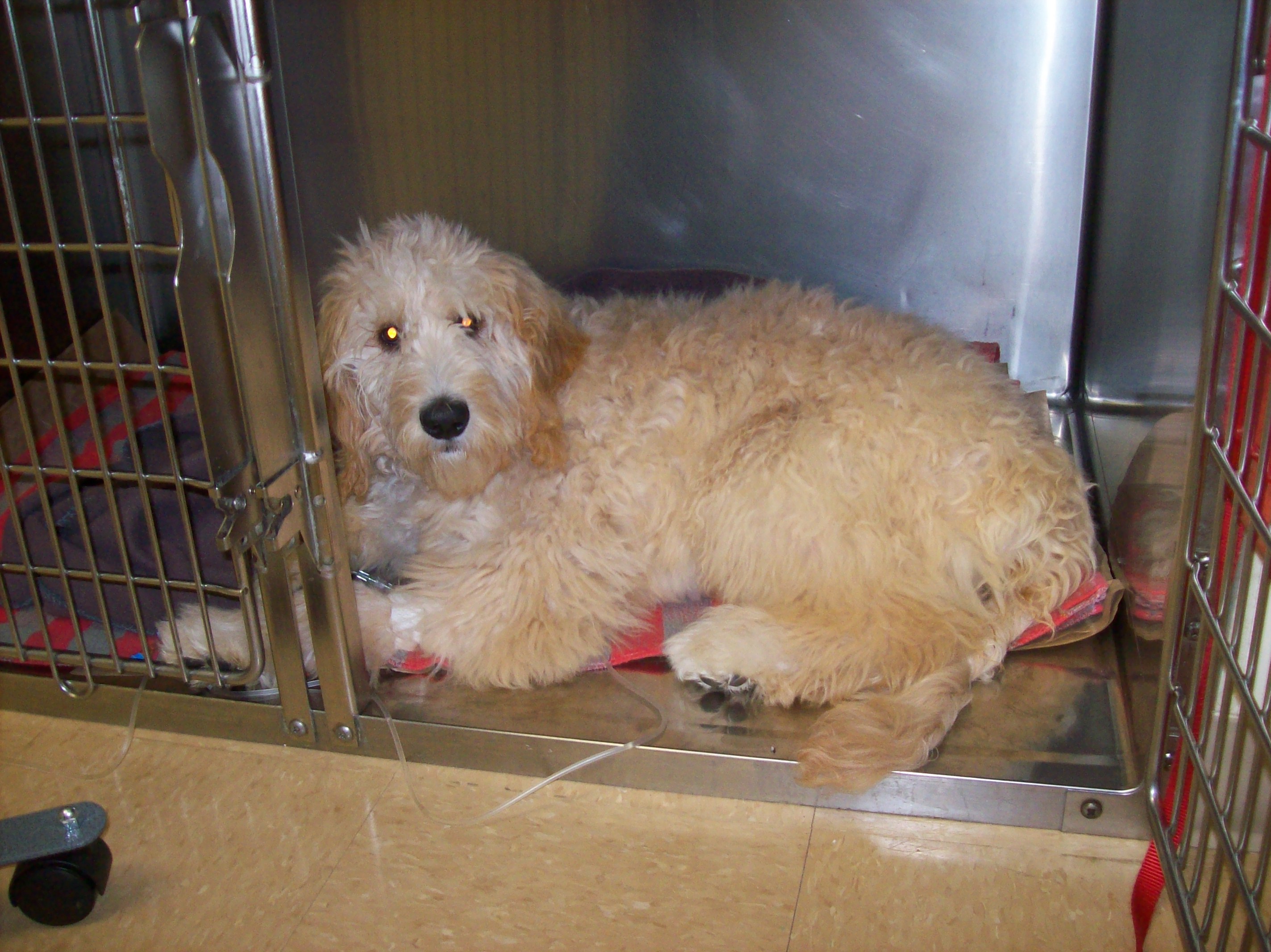
|




 Processing ....




 EMERGENCIES